Understanding UK Hallmarking:
What It Means for Your Jewellery
When you buy gold, silver, platinum, or palladium jewellery in the UK, you may notice a series of tiny stamped marks on the piece.
This is called a hallmark, and it's your guarantee of the precious metal content in the item you're buying.
What Is a Hallmark?
A hallmark is an official mark applied by one of the UK's independent Assay Offices, confirming that a piece of jewellery has been tested and verified to meet a specific standard of precious metal purity. It's not a manufacturer's claim — it's an independent, legally regulated guarantee.
There are four UK Assay Offices: London, Birmingham, Sheffield, and Edinburgh. Each has its own unique symbol, which forms part of every hallmark they apply.
When Is Hallmarking Required?
Under UK law, items must be hallmarked if they weigh more than the following thresholds:
Metal Minimum Weight Gold 1 gram Silver 7.78 grams Platinum 0.5 grams Palladium 1 gram
Items below these weights are exempt, though some retailers choose to have them hallmarked anyway as an extra mark of quality.
What Does a Hallmark Actually Show?
A typical UK hallmark includes:
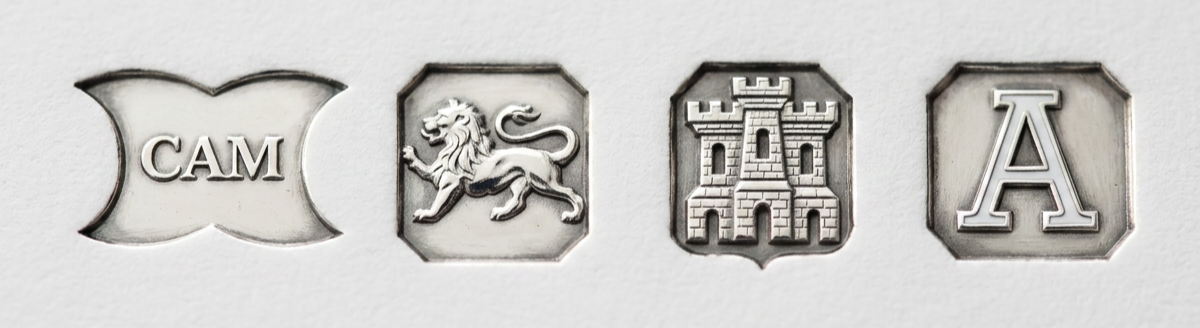
Sponsor's mark – identifies the maker, Savage Daughter’s makers mark is 2 half moons with my initials CAM as shown opposite
Fineness (purity) mark – shows the precious metal content, e.g. 925 for sterling silver, 750 for 18ct gold
Assay Office mark – shows which of the four offices tested the piece, Savage Daughter is registered with the Edinburgh Assay Office which has a castle as its identifier
Date letter (optional since 1999, but still often included) – indicates the year of testing
Some pieces also carry the Common Control Mark, recognised across countries that are part of the international hallmarking convention, allowing hallmarked items to be sold across member countries without retesting.
Why It Matters to You
Hallmarking exists to protect buyers. It means you can trust that:
The metal content is exactly what it's claimed to be
The item has been independently tested, not just certified by the seller
You have a legal safeguard if a piece is ever found to be misdescribed
When shopping for fine jewellery, look for the hallmark — usually found on the inside of a ring band, the clasp of a bracelet or necklace, or another discreet location on the piece. If you can't see one on an item that should carry one, it's worth asking the retailer why.